
What It Costs You to Skip This
Lehigh Acres sits squarely in hurricane season, and that means rolling outages from afternoon downpours, tropical storms, and the occasional direct hit all the way through November. If you don't know how to work your garage door by hand, a dead opener motor can trap your car in the garage right when you need to evacuate, or force you to improvise with a crowbar or a car jack and bend the track, snap a cable, or pull the bottom bracket loose. None of those repairs are cheap, and all of them are avoidable. On the other end, reconnecting the opener wrong after the power comes back can leave the safety reversal disabled, which is the feature that stops the door from closing on a car bumper, a pet, or a kid's bike. Twenty minutes with this guide now saves you a service call, or worse, an injury, during the next storm.
Tools You'll Need
- A stepladder, if your release cord or trolley sits higher than arm's reach
- A flashlight or headlamp (outages rarely come with daylight to spare)
- Work gloves, to protect your hands on the track and door edges
- A second person, since most residential doors weigh well over 100 pounds
- Garage door lubricant or WD-40 for the rollers and hinges, optional but helpful if the door feels stiff from humidity
How to Open the Door Manually During an Outage
- Make sure no one is trying to open it from a remote or wall button first. If the opener has partial power or is cycling, disengaging mid-motion is how fingers get pinched.
- Find the emergency release cord — the red handle hanging from a lever on the trolley, the part that rides along the rail above the door.
- Pull the cord down and toward the motor unit. You'll feel or hear the trolley disconnect from the drive carriage. The door is now free of the opener entirely.
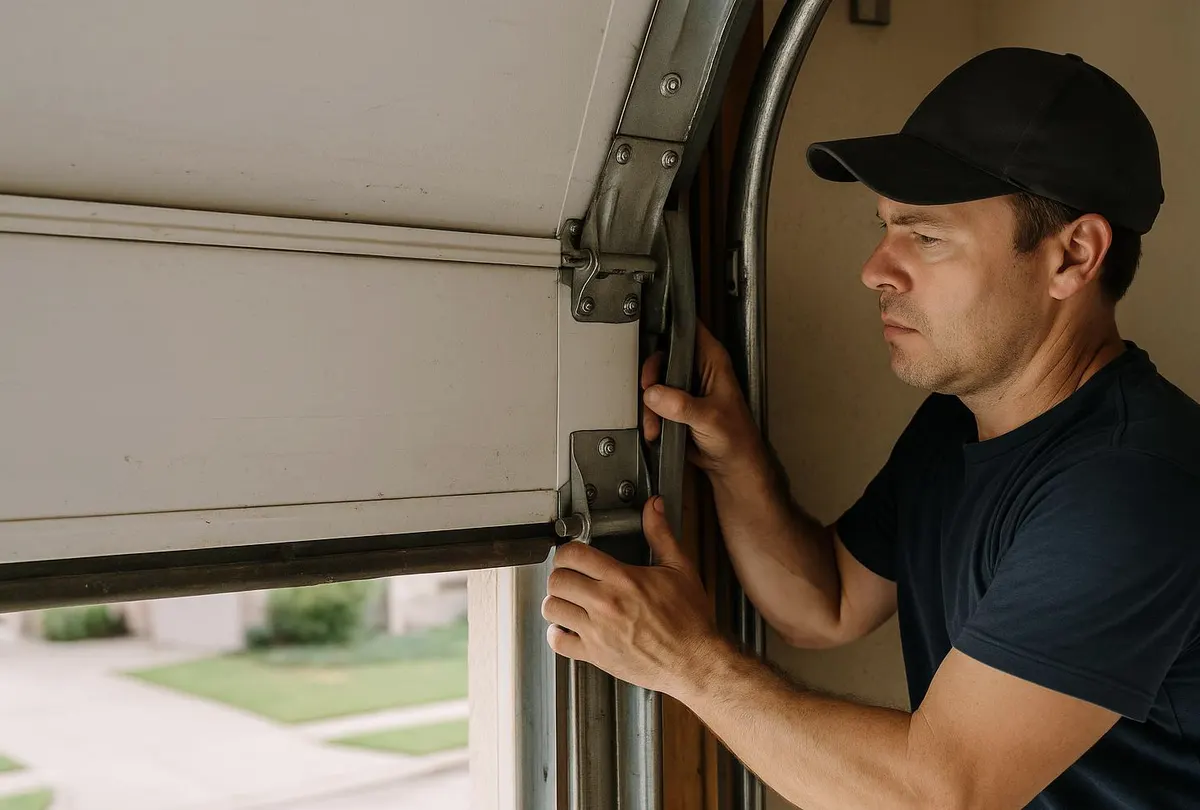
- Lift the door by hand, using both hands on the bottom section. Keep your fingers off the horizontal seams between panels — that's where pinch points happen. If the door rises smoothly and stays up on its own, it's properly balanced and the spring is doing its job.
- Stop immediately if the door feels unusually heavy or won't stay open without your hands on it. That's not a power problem — that's a broken or weakening spring, and forcing it further can snap a cable or drop the door suddenly.
How to Close and Secure It During the Storm
- Pull the door down firmly by the bottom section until it seats flat against the floor track.
- If your door has a manual slide lock or deadbolt-style lock bar, engage it. This matters more than it sounds — wind-driven rain and pressure changes during a storm can work a door up if it's resting loose on an unpowered opener.
- Check the weatherstripping along the bottom is seated evenly. Swelling from humidity can make one side sit higher than the other, leaving a gap that lets water in.
Re-Engaging the Opener Once Power Returns
- Confirm power is actually restored to the outlet and breaker the opener runs on, not just that the lights are back on in the house.
- Close the door fully by hand first before reconnecting anything. Reconnecting with the door half-open can cause the opener to misjudge travel limits.
- Pull the release cord again, or push the trolley along the rail toward the door until it clicks back into the drive carriage. You should feel it lock in.
- Test it with the remote or wall button and watch the full open-and-close cycle. It should move smoothly without grinding, stalling, or reversing unexpectedly.
- Test the auto-reverse safety feature by setting a roll of paper towels or a 2x4 flat on the floor where the door closes. The door should touch it and reverse immediately. If it doesn't, stop using the opener until that's fixed.
What You Can Safely Do Yourself
Pulling the release cord, lifting and lowering the door by hand, re-engaging the trolley, and running the basic reversal test are all normal homeowner tasks. They don't require special tools or training, just care around moving parts.
When It's Time to Call a Technician
If the door won't stay up on its own, feels unusually heavy, or drops fast when you release it, that's spring tension, not a power issue. If the trolley won't click back into the carriage, or the opener runs but the door doesn't move, that points to an opener problem. And if the door came off track while someone tried to force it open during the outage, pushing it back by hand can bend the rail further — that's a job for a technician, not a crowbar.
When to Call Lehigh Acres Overhead Door Co
If your door felt heavy or wouldn't hold its position during the manual lift, or the opener wouldn't re-engage cleanly after the power came back, those are signs worth getting checked before the next storm rolls through. We handle Garage Door Spring Repair and Garage Door Opener Installation for homes across Lehigh Acres, Fort Myers, Cape Coral, and the surrounding Lee County communities, and we'll make sure your door is balanced, sealed, and ready for wind-load conditions before the next outage hits. If you're searching for a garage door company near Lee Blvd or anywhere else in Lehigh Acres FL 33971, give us a call and we'll get a technician out to check it properly.